 Add My Company

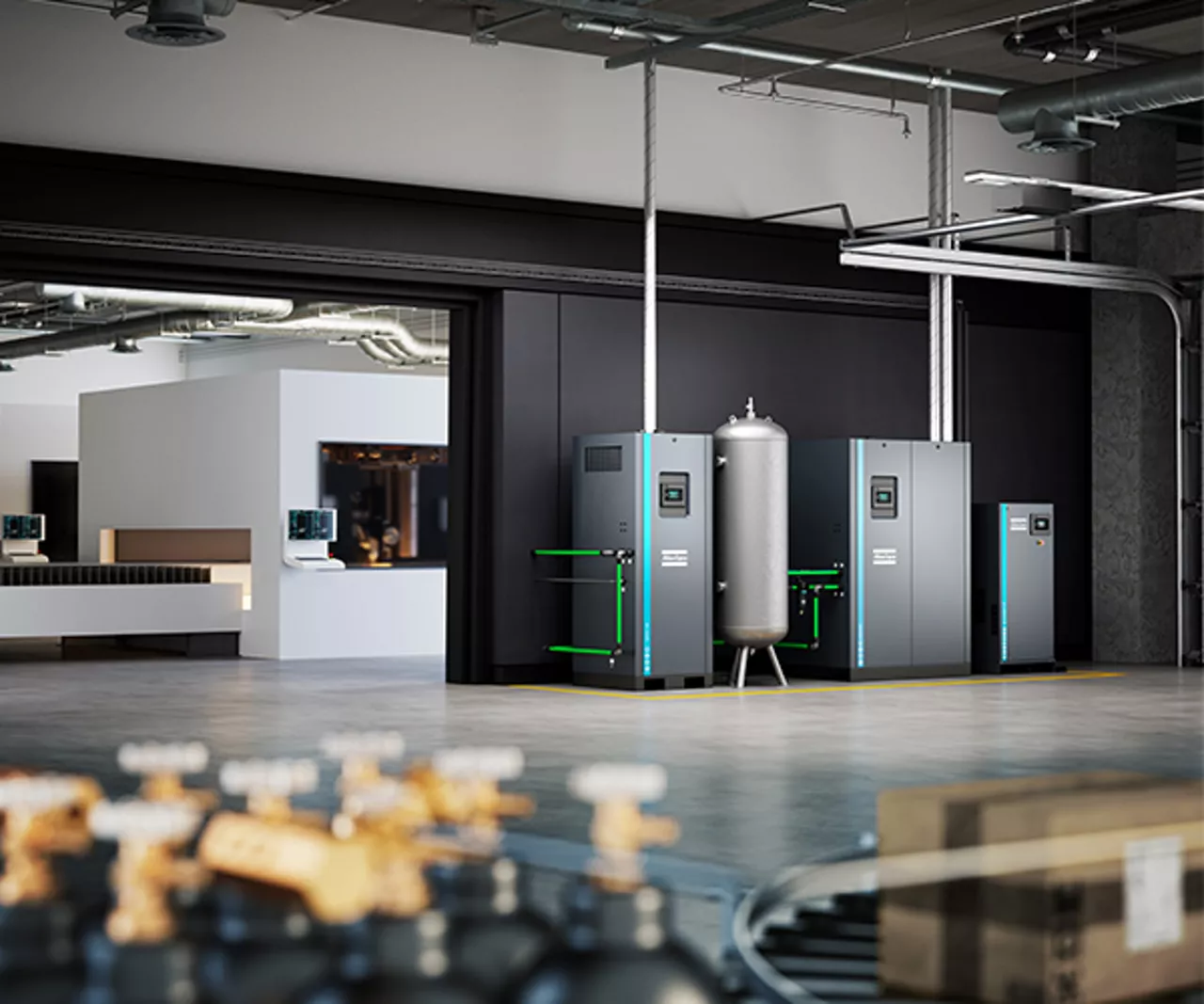
Variable speed drive (VSD) compressors are widely regarded as a more energy-efficient alternative to fixed-speed machines in applications with fluctuating demand.
As industry looks for ways to cut energy use and reduce emissions, attention has turned to these technologies, particularly in light of recent findings that efficient motors and drives could reduce global energy demand by up to 10%*. But while the principle behind VSD compressors is consistent - adjusting motor speed to match air demand - their real-world performance differs markedly depending on how they are engineered.
This article explores the underlying reasons why some VSD compressors deliver stronger energy savings, greater reliability and better resilience in harsh environments than others. Drawing on technical insights and application examples, it looks at key factors such as component integration, control strategies, start/stop energy losses and environmental protections. For engineers and specifiers, it highlights why a deeper understanding of the technology is essential.
Understanding the VSD Principle – and Its Limitations
At the heart of any VSD compressor is a simple idea: rather than running at full capacity regardless of demand, the compressor adjusts its motor speed to match airflow requirements in real time. This modulation helps to avoid the energy waste that characterises many fixed-speed systems, particularly during periods of low demand.
The principle is well established. Most VSD compressors use an inverter to regulate the motor speed, with sensors and control logic determining how much air is needed and when. When implemented effectively, this can deliver significant savings in electricity use, particularly in applications where demand fluctuates.
However, the effectiveness of this approach depends heavily on how the system is designed and built. Some manufacturers treat the inverter as an add-on, integrated into an otherwise conventional fixed-speed system. Others take a more holistic approach, designing the motor, element, inverter and controls as an integrated package. These differences are not always visible from technical datasheets, but they can have a considerable impact on performance, especially in demanding environments.
Start/Stop Losses: The Hidden Energy Cost
One area where differences in system design become particularly evident is in how compressors manage low demand or idle periods. In theory, a VSD compressor should slow down when demand drops, consuming less power and avoiding unnecessary wear. In practice, many machines are unable to maintain efficiency at the very lowest loads.
When demand drops below the minimum stable operating speed of the compressor element, the machine must shut down. In this phase, known as unloading, some VSD compressors continue to run without producing any air, consuming power but doing no useful work. Others must vent pressurised air from the system before restarting, a process that introduces additional energy losses known as ‘blow-off’ losses.
These start/stop behaviours are not uniform across all VSD systems. Some compressors can close the inlet valve and pause operation while maintaining internal pressure, avoiding the need for full depressurisation and restart. Others cannot, resulting in more frequent and energy-intensive cycles. Over time, these differences can accumulate into significant operational costs, particularly in installations where air demand fluctuates widely.
Understanding the behaviour of a compressor at the edges of its operating envelope is therefore just as important as assessing its peak efficiency. It is in these marginal conditions - the moments of slowing down, pausing, or restarting - that a well-designed system can demonstrate a measurable advantage.
The Role of Component Design and System Integration
Energy savings do not come from the VSD principle alone. They rely on how well the various components of a compressor system are matched and controlled. While some machines are assembled using standard motors and off-the-shelf inverters, others use custom components designed to work together as a cohesive system.
One example is the use of high-efficiency motors, such as those with IE4 or IE5 ratings, which can significantly reduce losses compared to standard alternatives. These motors are particularly effective when paired with advanced control systems capable of adjusting operating parameters dynamically. Integration with intelligent controllers and cloud-based monitoring platforms also helps to optimise system behaviour in real time, reducing waste and improving uptime.
Thermal management is another area where design plays a decisive role. In environments where compressors are subject to frequent load changes or high ambient temperatures, components such as oversized coolers, efficient oil separation systems and smart temperature regulation algorithms can make the difference between stable operation and repeated shutdowns.
It is also worth considering the implications for maintenance and long-term performance. Compressors that are designed as a system, with carefully matched inverter, motor and element, often exhibit better reliability over time, as each component operates within its intended parameters. By contrast, systems built from mismatched components may suffer from misalignment, overheating or accelerated wear, particularly when pushed to their limits.
Operating in the Real World: Heat, Humidity and Dust
A compressor's rated performance on paper rarely reflects the conditions it will face on the factory floor. High ambient temperatures, airborne dust, and elevated humidity are routine in many industrial environments, and not all VSD systems are built to handle them.
Take heat, for example. Extended periods of high ambient temperature can affect both motor and oil performance, potentially leading to overheating or system shutdown. While most compressors are rated to operate at temperatures up to 46 °C, some are engineered with additional safeguards that allow them to run reliably up to 55 °C. This can include intelligent control algorithms that automatically reduce the compressor’s operating speed to prevent thermal stress, along with oversized cooling components and separate oil and aftercoolers designed to minimise thermal shock.
In humid climates, moisture management becomes critical. During low-load operation, some VSD systems operate at lower internal temperatures, increasing the risk of condensation inside the drivetrain. If not properly controlled, this can lead to oil contamination, corrosion or mechanical failure. The risk is heightened when compressors are oversized for the application, as they spend more time running below optimal speeds. This makes accurate sizing, combined with smart temperature control, essential for reliability.
Dust presents another challenge, particularly in industries like woodworking or metal processing. Inverter components are especially vulnerable, and while some VSD compressors use inverters with basic IP20 protection, others incorporate IP54 or higher-rated protection, along with sealed drive trains and optional outdoor canopies. The choice of filtration and cabinet design also influences how well a compressor copes in dusty environments.
Ultimately, the durability and adaptability of a VSD compressor depend on how it has been engineered to manage the full spectrum of environmental stressors, not just its performance under ideal test conditions.
Sizing, Control and Return on Investment
While VSD compressors are often promoted for their energy-saving potential, the actual savings achieved in practice depend on how well the system is specified and controlled. A common error is to oversize the machine to allow for future expansion or perceived safety margins. However, oversizing can reduce efficiency, increase start/stop cycling, and accelerate wear.
Correct sizing requires a detailed understanding of air demand patterns across different shifts, seasons and production scenarios. An air audit is one way to capture this data, but even with limited information, specifiers can often make better choices by focusing on turn-down ratio and cycle losses. A compressor with a wider operating range and low unload losses will generally be better suited to variable demand than one with a narrow band of efficient operation.
Control systems also play a key role. Onboard logic that can coordinate multiple machines, prioritise loads, and adjust setpoints dynamically will often outperform systems that operate in isolation. Integration with building management or factory automation systems can further improve visibility and responsiveness.
Cost is always a factor. While VSD systems often carry a higher upfront price than fixed-speed alternatives, the long-term savings in electricity costs - which typically account for up to 80% of a compressor’s lifetime operating expenses - can be substantial. Payback periods are often short, especially in operations with fluctuating demand, but they are only realised when the system performs as intended. That performance is determined not just by the operating principle, but by how the machine is designed, built and integrated into the broader air system.
Variable speed drive compressors offer genuine advantages in energy efficiency, flexibility and operational control. But those benefits are not guaranteed. The working principle may be consistent, but the way it is implemented, from motor design and start/stop logic to environmental protection and control integration, varies significantly between manufacturers.
As pressure mounts to reduce energy consumption and cut emissions, it is understandable that VSD technology has come to the fore. Yet in the rush to improve efficiency, it is important not to treat all VSD compressors as equal. Specifying the right system means looking beyond the headline figures and asking more detailed questions about how the compressor performs in real-world conditions, how it responds to low demand, and how it manages the challenges of heat, humidity and dust.
For engineers, plant managers and specifiers, the lesson is clear: if you want the benefits of VSD technology, make sure you understand how the system works - and what compromises may be built in. Purchasing a variable speed machine alone is not a guarantee of performance. What matters is how that performance is delivered.
For more information on Comparing apples with apples – Why VSD compressors vary more than you think talk to Atlas Copco Ltd