 Add My Company

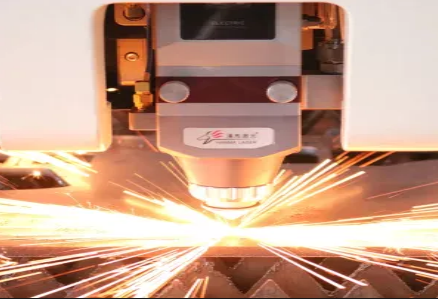
What is Electron Beam Welding?
It sounds like you might need to be a physics boffin to understand it, but if you’re not a rocket scientist, don’t worry! Thankfully, the physics behind ‘e-beam welding’ is elegantly simple and incredibly effective.
In a nutshell, electron beam welding uses a focused stream of high-velocity electrons to fuse metals within a vacuum chamber. These electrons, accelerated to half the speed of light, carry tremendous kinetic energy. When they strike the workpiece surface, this kinetic energy converts instantaneously into intense, localised heat, sufficient to melt even the most refractory metals.
Achieve Unmatched Precision and Depth-to-Width Ratios
Where EB welding truly distinguishes itself is in the extraordinary depth-to-width ratios it achieves, regularly exceeding 25:1 and in some applications reaching 40:1. Conventional arc welding processes typically manage ratios of perhaps 1:1 or 2:1, needing multiple passes to join thick sections.
Electron beam welding can penetrate 150mm of steel in a single pass, creating a weld seam that’s remarkably narrow relative to its depth. This characteristic has some big advantages in manufacturing, for example:
Reduced heat input results in minimal thermal distortion, enabling components to maintain dimensional accuracy without requiring extensive post-weld machining.
The narrow heat-affected zone preserves the base material’s properties adjacent to the weld, crucial when working with heat-treated alloys or dissimilar metals.
Material waste decreases since there’s no need for bevelling thick sections or adding filler material.
The metallurgical quality of beam welding joints is exceptional. When tolerances are specified in microns rather than millimetres, if such precision is crucial, electron beam welding gets repeatable results that other processes can’t match.
Which Industries Depend on Electron Beam Welding?
Medical device manufacturers use electron beam welding for pacemaker housings, surgical instruments, and implantable devices. The process’s precision allows the joining of miniature components while its cleanliness meets stringent biocompatibility requirements. All of these applications share common requirements: absolute reliability, exceptional quality, and the willingness to invest in advanced manufacturing technology.
Aerospace manufacturers were among the earliest adopters of EBW technology. Turbine blades for jet engines, structural components for aircraft frames, and rocket motor casings all rely on the process’s ability to create defect-free joints in exotic alloys. The space industry depends on electron beam welding for fuel tanks and pressure vessels, where even microscopic flaws could prove catastrophic.
Nuclear power generation requires components that will perform reliably for decades under extreme conditions. Reactor vessel assemblies, fuel rod cladding, and coolant system components benefit from EBW’s clean, contamination-free joining process. The automotive sector, particularly in high-performance and electric vehicle manufacturing, uses the technology for transmission gears, differential assemblies, and battery housings where weight reduction and strength are crucial.
What Are the Limitations and Cost Considerations?
Despite its great advantages, electron beam welding isn’t universally applicable. The vacuum chamber requirement limits workpiece dimensions: components must physically fit within the chamber, typically restricting dimensions to a few metres maximum. Achieving and maintaining a vacuum adds cycle time, reducing throughput compared to atmospheric welding processes.
Industrial EBW systems cost more than conventional equipment, whilst specialist operator training represents an ongoing expense. For the high-volume production of relatively simple joints, traditional methods often work out to be more economical.
Notably, electron beam welding justifies its cost when component criticality, material challenges, or precision requirements exceed what conventional processes can reliably deliver, making it essential to evaluate each application on its specific merits.
Partner with Coler Supply for Your Welding Requirements
Selecting the ideal welding process requires expertise and access to quality materials. Coler Supply provides comprehensive welding supplies, technical guidance, and industry knowledge to support your manufacturing operations.
Contact our team today on +44(0)1827 712910 or email us at sales@coler.co.uk to discuss your specific application requirements and discover how we can enhance your welding capabilities.
For more information on Electron Beam Welding (EBW): When Precision Really Matters talk to Coler Supply Solutions Ltd